H&M Case Study — Mountains of Unsold Clothes: H&M's Race to Reinvent Fast Fashion
Hennes and Mauritz, operating principally under the H&M brand, entered the late 2010s as one of the largest fast-fashion retailers in the world. Founded in Sweden in 1947, the company had grown through several decades of disciplined geographic expansion into a global retailer with approximately 5,000 stores across more than 70 countries and annual revenue exceeding 200 billion Swedish krona.
The competitive position had been built on a model combining rapid product introduction, low price points, broad geographic distribution, and aggressive marketing. By 2018, that model was under extraordinary pressure from multiple directions simultaneously.

What Went Wrong — The Inventory Crisis
The most visible crisis was an inventory crisis of extraordinary scale. Approximately €4.3 billion of unsold inventory had accumulated across H&M's global stores and warehouses — representing both a substantial financial drag through working capital and an emerging reputational problem as press coverage focused on the environmental implications of fast fashion's overproduction.
Industry analysts identified the inventory problem as structural rather than transitory. H&M had been systematically over-ordering against demand forecasts that did not anticipate the consumer shift toward online channels, the rise of Zara and emerging ultra-fast-fashion players, and the broader generational shift in consumer attitudes toward fashion consumption. The company's traditional buying model — placing large orders months in advance based on trend forecasting — had generated the inventory surplus because the forecasting models could not account for the acceleration of fashion cycles driven by social media and the shift of consumer discovery toward digital platforms.
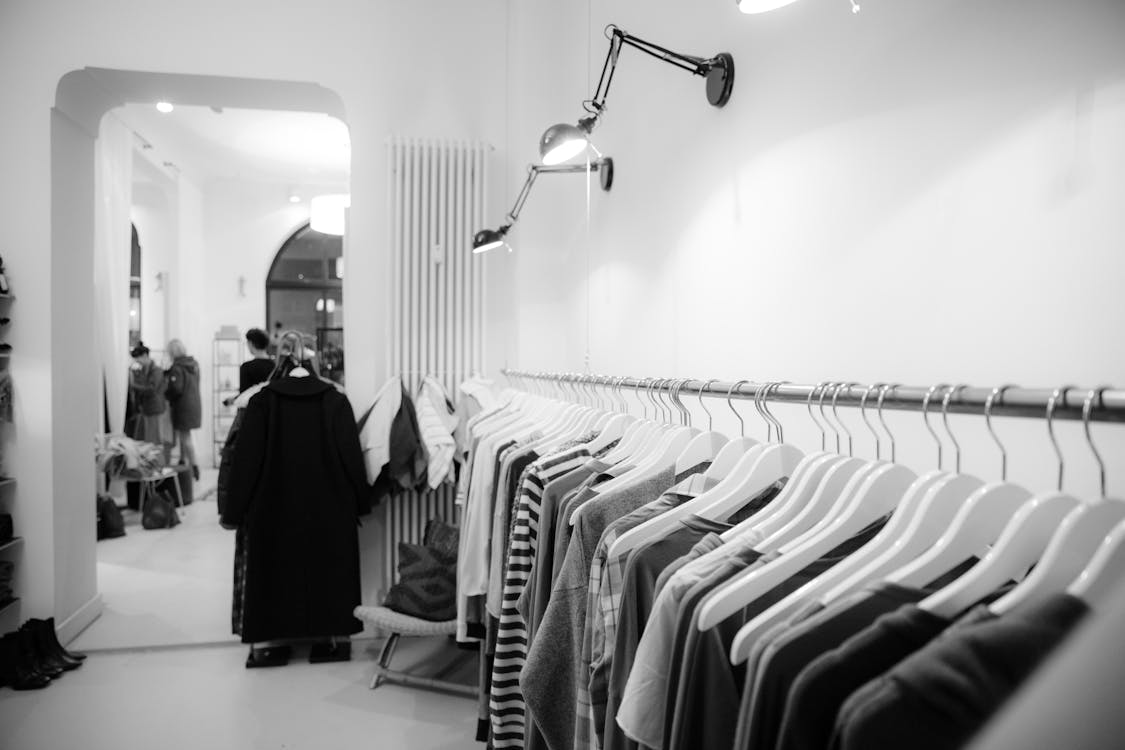
The physical manifestation of the inventory problem was unsettling: H&M stores globally contained racks of garments that had been marked down repeatedly and still were not selling, occupying floor space, consuming staff attention, and generating no revenue. In some markets, H&M reportedly disposed of unsold inventory by shredding and incineration — a practice that, when exposed by investigative journalism, generated significant reputational damage precisely as consumer sensitivity to fast fashion's environmental impact was increasing.
The Brand Crisis — The "Coolest Monkey" Incident
In January 2018, H&M published a product image in which a Black child modelled a hoodie with the slogan "Coolest Monkey in the Jungle." The image, which had appeared to pass through H&M's standard content approval process without being flagged, generated immediate and widespread condemnation. The incident — widely described as racially insensitive and representing a systemic failure of diversity representation in H&M's creative and approval processes — produced a significant brand crisis.
Several high-profile figures publicly severed relationships with H&M. The Weeknd, a major global music artist who had collaborated with the brand, publicly ended his relationship and described the image as "shocking and racist." Major retailers in South Africa, where historical racial sensitivities created particular urgency, experienced protests and temporary closures of H&M stores.
H&M's response — apology, removal of the image, investigation — followed the standard crisis communication playbook. The deeper damage was to the brand's relationship with younger consumers and communities of colour who were already questioning fast fashion's ethical dimensions.

The Ultra-Fast-Fashion Threat
Even as H&M was managing the inventory crisis and the brand controversy, a new competitive threat was emerging that made the existing challenges look modest in scale. Shein, the Chinese ultra-fast-fashion platform, had quietly built a direct-to-consumer model that made H&M's product introduction speed look slow by comparison.
Shein's algorithm-driven design process could identify trending styles on TikTok and Instagram, create new product designs, manufacture them in small batches in Guangdong factories, and make them available to global consumers within days. The price points were below H&M's already low prices. The product variety was orders of magnitude larger. And the discovery mechanism — social media algorithmic amplification of product content created by influencers and ordinary consumers — required no physical retail infrastructure and minimal traditional marketing spend.
Shein's model represented a fundamentally different approach to fashion retail that H&M's physical store network and traditional supply chain could not match on speed or price. The question H&M faced was not how to beat Shein at Shein's game — the answer to that was clearly "you can't, on those terms" — but how to articulate a value proposition that was genuinely differentiated from both Shein and from the premium sustainable fashion brands that were capturing the environmentally conscious segment.
The Transformation Strategy
Sustainability as a competitive differentiator — H&M made sustainability the centrepiece of its repositioning. The H&M Conscious collection, which used organic cotton, recycled polyester, and other sustainably sourced materials, was expanded and promoted as evidence of the brand's commitment to reducing its environmental footprint. The garment collection programme — allowing customers to return used clothing at H&M stores for sorting and recycling — was marketed as evidence of a closed-loop approach to fashion.
Critics argued, with some justification, that the sustainability positioning was partially greenwashing — marketing claims that implied a more fundamental commitment to sustainability than the underlying business model supported. A company that continues to produce hundreds of millions of garments annually cannot be genuinely sustainable at the margin through a collection programme. However, the investments in sustainable materials sourcing were genuine, and the direction of travel was credibly toward a more sustainable model even if the pace was insufficient.
Digital and data transformation — H&M invested substantially in improving its data capabilities for demand forecasting and inventory management. The accumulation of €4.3 billion in unsold inventory was partly a forecasting failure, and the response was to build more sophisticated models that incorporated social media trend signals, real-time sales data at SKU level, and geographic demand variation. The goal was to reduce order lead times, produce in smaller initial batches, and replenish successful styles more quickly — effectively moving toward a model closer to Zara's demand-responsive replenishment approach.
Portfolio brand strategy — H&M Group's brand portfolio — which includes COS, & Other Stories, Monki, Weekday, ARKET, and Afound — was developed as a strategic hedge against the H&M flagship's position in an increasingly contested middle market. COS competed at higher price points with a minimalist aesthetic appealing to quality-conscious urban consumers. ARKET positioned as an even more premium sustainable offering. Afound, launched in 2018, provided an outlet format for excess inventory from across the group's brands.

The Financial Recovery
H&M's financial performance through the crisis and recovery period was volatile. The 2020 pandemic added a further disruption — store closures across major markets reduced revenue and required additional markdown activity on spring/summer 2020 inventory. Through 2022 and 2023, revenue recovered as stores reopened and the digital channel grew.
By 2023, H&M Group reported annual revenue of approximately 224 billion Swedish krona — exceeding pre-pandemic levels — with the digital channel representing approximately 30% of total sales. The inventory position had improved significantly from the €4.3 billion peak, though inventory management remained a focus area for continued improvement.
Key Lessons
Inventory management is a strategic capability, not just an operational function. H&M's inventory crisis was not caused by a single bad buying decision — it was caused by a systematic approach to demand forecasting and ordering that had become misaligned with a rapidly changing consumer environment. The strategic response — investing in data capabilities, shortening order lead times, adopting demand-responsive replenishment — required years of capability building.
Environmental pressure on fashion business models will intensify. The consumer and regulatory environment around fast fashion's environmental impact — water usage, textile waste, carbon emissions from logistics — is moving in one direction only. Brands that make genuine structural changes to their environmental footprint before they are forced to will have a strategic advantage over those that wait for regulation to compel change.
A portfolio of brands allows a group to serve multiple consumer segments simultaneously. H&M Group's multi-brand structure allows it to offer premium sustainable fashion through COS and ARKET, trend-driven fashion through H&M, and outlet value through Afound — capturing consumers across a much wider segment than a single brand could serve credibly.
| Year | Event | Impact |
|---|---|---|
| 2018 | €4.3B inventory crisis revealed | Financial drag; environmental reputational damage |
| 2018 | "Coolest Monkey" controversy | Brand relationship with diverse consumers damaged |
| 2019 | Shein accelerates globally | Ultra-fast-fashion competitive pressure intensifies |
| 2020 | COVID store closures | Additional inventory and revenue disruption |
| 2022–23 | Recovery | Revenue exceeds pre-pandemic; digital share ~30% |