Case Study

Uniqlo Case Study — Business Model, Marketing Strategy & LifeWear Philosophy

A comprehensive case study of Uniqlo — from a single menswear shop in Hiroshima to the world's third-largest apparel retailer. Explore its LifeWear philosophy, fabric innovation, and global expansion strategy.

Meritshot Team20 March 202621 min read
Business ModelMarketing StrategyRetailLifeWearUniqlo

Uniqlo Case Study — Business Model, Marketing Strategy & LifeWear Philosophy

Introduction

Uniqlo is the world's third-largest apparel retailer and Japan's most successful global fashion brand. Owned by parent company Fast Retailing Co., Ltd., the brand operates 2,400+ stores across 25 markets worldwide, generating annual revenue exceeding $21 billion. With a workforce of more than 110,000 employees, Uniqlo has quietly built one of the most distinctive and resilient business models in the global fashion industry.

What makes Uniqlo remarkable is what it deliberately chooses not to do. In an industry obsessed with chasing trends, Uniqlo rejects fast fashion entirely. Instead, the brand is built on a philosophy it calls "LifeWear" — simple, high-quality, functional clothing designed for everyday life. Uniqlo does not sell fashion; it sells fabric innovation, comfort, and utility at accessible prices. That singular focus has transformed a small menswear shop in provincial Japan into a global powerhouse challenging Zara, H&M, and Gap on the world stage.

Uniqlo LifeWear clothing

This case study examines how Uniqlo built a global apparel brand through fabric-first innovation, the SPA business model, strategic global expansion, and a marketing approach that is as understated as its clothing.


A Brief History of Uniqlo

The Founding and Early Years (1949 - 1997)

Uniqlo's origins trace back to 1949, when Tadashi Yanai's father, Hitoshi Yanai, founded a men's clothing company called Ogori Shoji in Ube City, Yamaguchi Prefecture, Japan. For decades, the company operated as a modest, regional menswear retailer — far from the global empire it would become.

The pivotal moment came in June 1984, when Tadashi Yanai opened the first Unique Clothing Warehouse store in Hiroshima. The name was soon shortened to "Uniqlo" — legend has it that a Hong Kong-based registration clerk mistakenly wrote "Uniqlo" instead of "Uniclo," and Yanai kept the name because he liked its distinctive sound. The store's concept was simple but radical for Japan at the time: offer casual, everyday clothing at low prices in a spacious, self-service retail environment, similar to American casual wear stores.

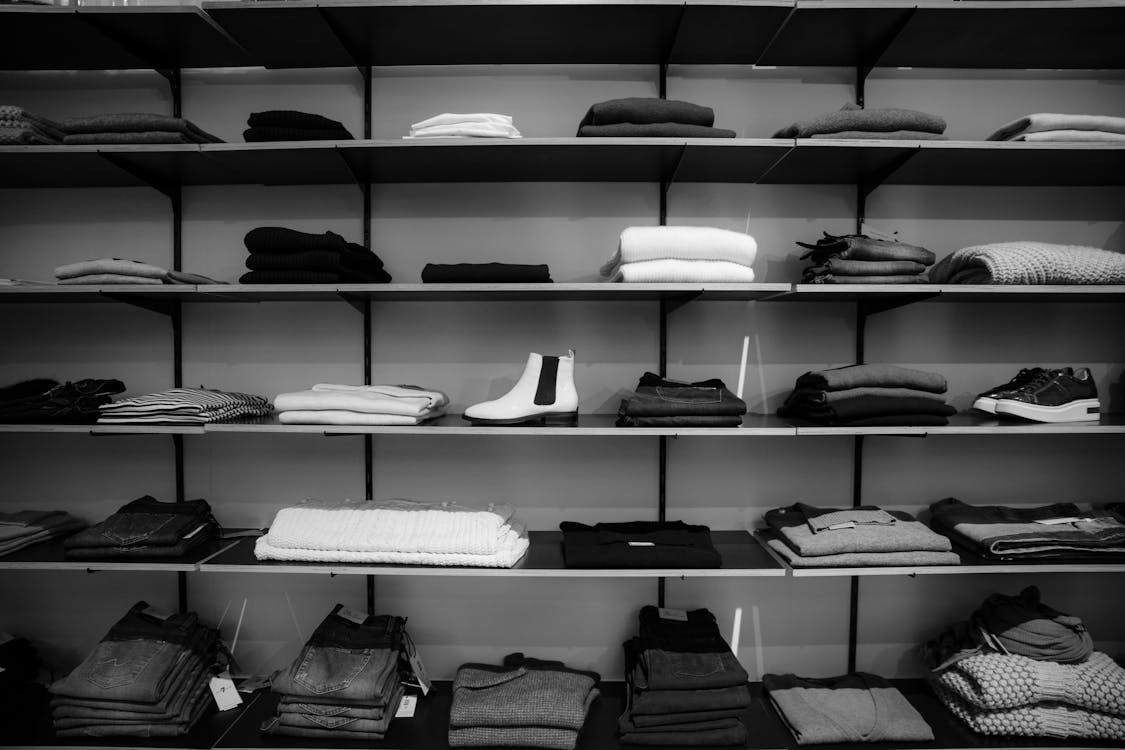
Fashion retail store

Yanai was inspired by global retail models he had observed during overseas trips. He admired the efficiency of Gap and the accessible pricing of mass-market American retailers. His vision was to bring that model to Japan — but with a sharper focus on quality and function.

The Fleece Revolution and National Breakthrough (1998 - 2000)

Throughout the 1990s, Uniqlo expanded steadily across Japan, but it was the 1998 fleece campaign that catapulted the brand into national consciousness. Uniqlo offered high-quality fleece jackets at the astonishingly low price of 1,900 yen (roughly $15 USD) — a fraction of what competitors charged for comparable products.

The campaign was a phenomenon. Uniqlo sold 8.5 million fleece jackets in a single season, and by 2000, that figure climbed to 26 million units. The fleece boom did more than drive sales; it fundamentally changed how Japanese consumers perceived Uniqlo. The brand went from a budget retailer to a national institution, and it proved that Japanese consumers would embrace high-quality basics at affordable prices if the quality was undeniable.

Key Milestones

  • 1949 — Ogori Shoji founded by Hitoshi Yanai as a men's clothing company
  • 1984 — First Unique Clothing Warehouse store opens in Hiroshima
  • 1991 — Company renamed to Fast Retailing Co., Ltd.
  • 1994 — Fast Retailing listed on the Hiroshima Stock Exchange
  • 1997 — Listed on the Tokyo Stock Exchange
  • 1998 — Fleece campaign launches; sells 8.5 million units in first season
  • 2001 — First international store opens in London
  • 2006 — Flagship store opens in New York SoHo
  • 2006 — Partnership with Toray Industries begins for advanced fabric development
  • 2011 — Launches global flagship concept "Uniqlo City" in Shinsaibashi, Osaka
  • 2013 — Collaboration with designer Christophe Lemaire begins (now Uniqlo U)
  • 2019 — First stores open in India (New Delhi)
  • 2023 — International revenue surpasses domestic Japan revenue for the first time

Tadashi Yanai's leadership style is central to Uniqlo's identity. The richest person in Japan (with an estimated net worth exceeding $35 billion), Yanai is known for his intense focus on execution, his willingness to learn from failure, and his audacious ambition. He has publicly stated his goal of making Fast Retailing the world's number one apparel retailer, surpassing Inditex (Zara) — a goal that no longer seems unrealistic given Uniqlo's trajectory.


Products & LifeWear Philosophy

The LifeWear Concept

At the heart of Uniqlo's product strategy is the LifeWear philosophy. Unlike trend-driven fast fashion brands that produce thousands of SKUs per season to chase the latest runway looks, Uniqlo takes the opposite approach. The brand focuses on a curated, limited range of essential, high-quality basics designed to be worn by anyone, anywhere, in any context.

LifeWear is clothing designed to make everyday life better. It prioritises comfort, functionality, quality, and simplicity. A Uniqlo T-shirt, a pair of jeans, or a lightweight down jacket is not meant to make a fashion statement — it is meant to be so well-made and so comfortable that it integrates seamlessly into the wearer's daily life.

Minimal fashion style

This philosophy gives Uniqlo a unique position in the global apparel market. While Zara and H&M compete on speed-to-trend, Uniqlo competes on fabric innovation and timeless design. The result is clothing that does not go out of style and can be worn season after season — a proposition that resonates strongly with consumers who are increasingly sceptical of disposable fashion.

Signature Fabric Technologies

Uniqlo's most significant competitive advantage is its proprietary fabric technologies, developed in partnership with Japanese materials science company Toray Industries. These fabrics are not gimmicks; they are genuine innovations that solve real problems for consumers.

HeatTech — Launched in 2003, HeatTech is a lightweight thermal fabric that generates heat from the body's own moisture. It comes in three warmth levels (standard, Extra Warm, and Ultra Warm) and has become one of the best-selling clothing technologies in the world. Uniqlo has sold over 1.5 billion HeatTech items globally since its launch.

AIRism — A moisture-wicking, quick-drying, anti-odour fabric designed for warm weather and active use. AIRism underwear, T-shirts, and innerwear have become staples for consumers in hot and humid climates across Asia and beyond.

Ultra Light Down — Uniqlo's ultra-lightweight, packable down jackets weigh as little as a smartphone and compress into a small pouch. Despite their minimal weight, they provide genuine warmth — a product that has been widely imitated but never matched in terms of quality-to-price ratio.

Blocktech — A wind and water-resistant fabric used in outerwear, designed for urban commuters who need functional protection without the bulk of traditional outdoor gear.

Designer Collaborations

While Uniqlo is not a fashion-forward brand, it has successfully elevated its design credentials through strategic collaborations:

  • Jil Sander (+J Collection) — A landmark collaboration that brought minimalist luxury design to Uniqlo's price point, launching in 2009 and revived in 2020
  • Uniqlo U (Christophe Lemaire) — An ongoing collaboration with the former Hermes artistic director, producing elevated basics that have earned a cult following among fashion-conscious consumers
  • UT (Uniqlo T-shirts) — Graphic T-shirt collaborations with artists, brands, museums, and cultural properties, including partnerships with MoMA, Marvel, Disney, and Haruki Murakami
  • Ines de la Fressange — A collaboration with the Parisian fashion icon, adding French elegance to Uniqlo's basics
  • Theory — Uniqlo's parent Fast Retailing holds a stake in Theory, enabling cross-pollination of design expertise

Business Model

The SPA Model

Uniqlo's business model is built on the SPA (Specialty retailer of Private label Apparel) concept — a model in which the company controls every stage of the value chain, from product planning and design through manufacturing, distribution, and retail sales. This vertical integration is the engine that powers Uniqlo's ability to deliver high-quality products at remarkably low prices.

Unlike traditional retailers that buy from external brands and wholesalers, Uniqlo designs all of its own products, negotiates directly with fabric suppliers, works with dedicated partner factories, manages its own logistics, and sells exclusively through its own stores and online channels. By eliminating middlemen at every stage, Uniqlo captures the full margin and maintains complete control over quality, pricing, and brand experience.

Clothing and retail

Fabric-First Approach

What distinguishes Uniqlo from virtually every other apparel company is its fabric-first approach to product development. While most fashion brands begin with design and aesthetics, Uniqlo begins with the fabric itself. The company invests heavily in material science, asking the question: "How can we make this fabric perform better for the wearer?"

This is why partnerships like the one with Toray Industries are so central to Uniqlo's strategy. Toray is one of the world's leading chemical and materials companies, and the collaboration has produced HeatTech, AIRism, and other proprietary fabrics that give Uniqlo a genuine technological moat in a category where most competitors rely on the same commodity textiles.

Low Prices Through Innovation, Not Trend-Chasing

Uniqlo keeps prices low not by cutting quality or by racing to produce the latest trends, but through operational efficiency, volume production, and fabric innovation. Because Uniqlo produces a relatively limited number of styles in very high volumes, it achieves enormous economies of scale. A single style of HeatTech undershirt might be produced in tens of millions of units across dozens of colours and sizes, driving per-unit costs far below what smaller production runs would allow.

This approach also eliminates the markdowns and unsold inventory that plague fast fashion retailers. Because Uniqlo's products are not trend-dependent, they do not become obsolete at the end of a season. This reduces waste, improves sell-through rates, and protects margins.


Supply Chain & Innovation

Supply chain and fabric innovation

The Toray Partnership

The relationship between Uniqlo and Toray Industries is one of the most important strategic partnerships in the global apparel industry. Established in 2006, the partnership is a long-term commitment to joint research and development of advanced textile technologies.

Toray brings world-class materials science capabilities — the company produces carbon fibre for Boeing aircraft, advanced membranes for water purification, and high-performance textiles for industrial use. By applying this level of technological sophistication to everyday clothing, the Uniqlo-Toray partnership has produced fabrics that would be impossible for a traditional apparel company to develop on its own.

The partnership operates on a strategic planning cycle that extends years into the future. Rather than reacting to seasonal trends, Uniqlo and Toray plan fabric innovations three to five years ahead, ensuring a continuous pipeline of product improvements.

Quality Control and the Takumi Team

Uniqlo maintains rigorous quality control through its Takumi team — a group of highly skilled Japanese textile engineers and craftspeople who work directly with partner factories to ensure production meets Uniqlo's exacting standards. The Takumi team is deployed to key factories around the world, transferring Japanese manufacturing expertise and quality methodologies to production partners.

Strategic Factory Relationships

Unlike fast fashion brands that frequently shift production between hundreds of factories to find the lowest cost, Uniqlo maintains long-term, deep relationships with a relatively small number of strategic factory partners, primarily in China, Vietnam, Bangladesh, and Indonesia. These factories are treated as partners rather than interchangeable suppliers, which leads to better quality, more efficient production, and stronger alignment on product standards.


Distribution & Global Expansion

Japan: The Home Market

Japan remains Uniqlo's largest single market, with approximately 800 stores generating roughly 40% of total revenue. However, a historic milestone was reached in 2023 when international revenue surpassed domestic Japan revenue for the first time — a clear signal that Uniqlo's future growth will be driven by global markets.

In Japan, Uniqlo stores are ubiquitous, appearing in shopping centres, suburban roadside locations, and city centres. The brand enjoys extraordinary awareness and loyalty — surveys consistently show that the vast majority of Japanese adults own at least one Uniqlo item.

Greater China: The Growth Engine

Greater China (mainland China, Hong Kong, and Taiwan) is Uniqlo's most important growth market, with over 1,000 stores and rapidly increasing revenue. The region now generates more revenue than any single international market and is on track to rival Japan in total scale.

Uniqlo's appeal in China is driven by its combination of quality, affordability, and the cultural cachet of Japanese design. The brand is positioned as accessible premium — more elevated than domestic Chinese brands, but more affordable than European luxury. Uniqlo is expanding aggressively into Tier 2 and Tier 3 Chinese cities, where a growing middle class is eager for quality everyday clothing.

Southeast Asia: High-Growth Region

Southeast Asian markets — including Thailand, Philippines, Vietnam, Malaysia, Singapore, and Indonesia — represent a high-growth opportunity. These markets share demographic characteristics that favour Uniqlo: young populations, rising incomes, hot and humid climates (driving demand for AIRism), and growing appreciation for Japanese products and culture.

United States and Europe: Building the Brand

Uniqlo's expansion in the United States and Europe has been more deliberate and, at times, challenging. Early attempts to enter the US market with suburban mall locations largely failed, and the company has since shifted to a flagship-led strategy, concentrating on major urban centres like New York, Los Angeles, San Francisco, London, Paris, and Berlin.

The US and European markets are important for brand building and prestige, but they are not yet significant profit contributors. Uniqlo's approach in these markets is patient and long-term, prioritising brand awareness and cultural relevance over rapid store expansion.


Marketing Strategy

Minimal fashion marketing

Uniqlo's marketing strategy is as distinctive as its products — understated, product-focused, and built on the principle that the clothing itself should be the primary marketing vehicle.

UT Graphic Tees as Marketing

The UT (Uniqlo T-shirts) line is one of the most ingenious marketing strategies in retail. By collaborating with artists, brands, and cultural properties to produce limited-edition graphic T-shirts, Uniqlo turns every customer wearing a UT shirt into a walking advertisement. Collaborations with MoMA, Keith Haring, Kaws, Marvel, Star Wars, Billie Eilish, and others create cultural relevance and collectibility, driving both foot traffic and media coverage at minimal advertising cost.

Designer Collaborations as Brand Elevation

Collaborations with designers like Jil Sander, Christophe Lemaire, and Ines de la Fressange serve a dual marketing purpose: they generate media attention and consumer excitement while elevating Uniqlo's brand perception. A consumer who buys a Uniqlo x Jil Sander coat sees Uniqlo differently than one who only knows the brand for basic T-shirts. These collaborations position Uniqlo at the intersection of quality and design without the pretension of luxury pricing.

Flagship Stores and Uniqlo City

Uniqlo's global flagship stores — dubbed "Uniqlo City" stores — are key marketing assets. Located on the most prominent retail streets in the world, including Fifth Avenue in New York, Rue Scribe in Paris, Oxford Street in London, and Ginza in Tokyo, these stores are designed to be immersive brand experiences rather than simple retail locations.

Uniqlo City stores are architecturally striking, often spanning multiple floors, and showcase the full breadth of the brand's product range, fabric technologies, and collaborations. They serve as brand cathedrals — destinations that attract both dedicated customers and curious tourists, building awareness and affinity in markets where Uniqlo may still be establishing its identity.

Minimal Traditional Advertising

Unlike many competitors who invest heavily in traditional advertising campaigns, Uniqlo's marketing spend is comparatively restrained. The brand invests strategically in digital marketing, social media, and in-store experience rather than blanket television or print campaigns. This efficiency is consistent with Uniqlo's overall philosophy: let the product speak for itself.

Brand Ambassadors

Uniqlo selects brand ambassadors who embody its values of performance, discipline, and quiet excellence:

  • Roger Federer — The tennis legend signed a landmark $300 million, 10-year deal with Uniqlo in 2018, leaving Nike. Federer's elegance and consistency align perfectly with Uniqlo's LifeWear philosophy
  • Kei Nishikori — Japanese tennis player and long-standing Uniqlo ambassador
  • Adam Scott — Australian professional golfer
  • Shingo Kunieda — Wheelchair tennis champion, reflecting Uniqlo's commitment to inclusivity
  • Ayumu Hirano — Olympic snowboarder, connecting the brand to youth and action sports

Digital Transformation

Uniqlo has accelerated its digital transformation in recent years, recognising that the future of retail demands a seamless integration of online and offline experiences.

Online Growth

E-commerce now accounts for a growing share of Uniqlo's total revenue, with the company targeting 30% online sales as a medium-term goal. The online store offers the full product range and frequently features online-exclusive items and promotions to drive digital traffic.

Order & Pick

Uniqlo's Order & Pick service allows customers to purchase items online and collect them in-store, often within a few hours. This service bridges the online-offline divide, driving foot traffic to physical stores while giving customers the convenience of digital shopping.

StyleHint App

The StyleHint app is a user-generated styling platform where customers share outfit photos featuring Uniqlo products. The app uses AI-powered image recognition to identify items in user photos and links directly to product pages, creating a community-driven discovery and shopping experience. StyleHint transforms customers into brand ambassadors and generates authentic, relatable content that is far more persuasive than traditional advertising.

RFID Self-Checkout

Uniqlo has pioneered the use of RFID (Radio Frequency Identification) technology in its stores. Every Uniqlo product is embedded with an RFID tag, enabling self-checkout systems that can instantly scan all items in a shopping basket without requiring individual barcode scanning. Customers simply place their items in a designated bin, and the system identifies every product in seconds.

This technology reduces checkout times, eliminates queues, and improves inventory accuracy. It also provides Uniqlo with real-time data on stock levels, sales velocity, and product movement — information that feeds directly into supply chain optimisation.


Uniqlo in India

Uniqlo entered the Indian market in October 2019, opening its first store at Ambience Mall in Vasant Kunj, New Delhi. The India launch was a significant strategic move, marking Uniqlo's entry into one of the world's largest and fastest-growing consumer markets.

The initial stores were met with strong consumer interest. Opening-day crowds and long queues demonstrated pent-up demand for the brand, which many Indian consumers had encountered while travelling in Japan, Southeast Asia, or Europe.

India Expansion Strategy

Uniqlo's India strategy has been cautious and methodical:

  • Delhi NCR remains the primary market, with stores in key locations including Ambience Mall Vasant Kunj, DLF Avenue Saket, DLF Mall of India Noida, and DLF CyberHub Gurugram
  • Expansion to Mumbai and Bangalore has followed, targeting India's other major metropolitan consumer markets
  • The product range has been adapted for Indian conditions, with strong emphasis on AIRism products suited to India's hot climate and lightweight fabrics that align with local preferences
  • Pricing has been calibrated to balance Uniqlo's quality positioning with Indian price sensitivity — products are more affordable than international luxury brands but positioned above local mass-market options

Competitive Landscape in India

In India, Uniqlo competes with a diverse set of players:

  • Zara and H&M — The primary international competitors, both of which entered India earlier and have established substantial store networks
  • Domestic brands such as Fabindia, Mango (via franchise), and local fast-fashion players offer alternatives at various price points
  • E-commerce platforms like Myntra, Ajio, and Amazon Fashion dominate online fashion retail in India, presenting both a challenge and an opportunity for Uniqlo's digital strategy

Uniqlo's differentiation in India rests on the same pillars as its global strategy: superior fabric technology, quality basics, and a clean in-store experience that stands apart from the cluttered, discount-driven approach of many Indian retailers.


Key Statistics

MetricFigure
Annual Revenue$21 billion+
Parent CompanyFast Retailing Co., Ltd.
Global Stores2,400+
Markets25
Employees110,000+
FounderTadashi Yanai
Founder Net Worth$35 billion+ (richest in Japan)
HeatTech Items Sold (cumulative)1.5 billion+
Stores in Greater China1,000+
Stores in Japan~800
Roger Federer Deal$300 million / 10 years
First Store Year1984
First International StoreLondon, 2001
India Market Entry2019

Competitor Comparison: Uniqlo vs Zara vs H&M vs Gap

AspectUniqloZaraH&MGap
Parent CompanyFast RetailingInditexH&M GroupGap Inc.
Annual Revenue$21 billion+$36 billion+$22 billion+$15 billion+
Global Stores2,400+2,200+4,700+3,400+
Core PhilosophyLifeWear basicsFast fashion, speed-to-trendAffordable trend-driven fashionAmerican casual classics
Key StrengthFabric innovation and quality2-week design-to-store cycleDesigner collaborations, priceHeritage brand recognition
PricingLow-to-mid rangeMid rangeLow-to-mid rangeMid range
Design ApproachTimeless, functional basicsRapid trend replicationTrend-driven, seasonalClassic American casual
ManufacturingConcentrated partner factoriesProximity sourcing (Spain, Turkey, Morocco)Global sourcing networkGlobal sourcing network
SustainabilityRE.UNIQLO recycling programmeJoin Life sustainable collectionConscious Collection, circularity goalsGood Inc. sustainability initiatives
Digital StrategyStyleHint, RFID self-checkoutIntegrated online-offlineStrong e-commerce, appDeveloping; behind competitors
Biggest ChallengeWestern market penetrationOver-dependence on trend cycleSustainability criticism, margin pressureBrand relevance and identity crisis

Team collaboration and strategy

Uniqlo occupies a unique position in this competitive landscape. While Zara and H&M compete primarily on fashion and speed, Uniqlo competes on quality, fabric technology, and timelessness. This differentiation is its greatest strength — it is not caught in the same cycle of overproduction, heavy markdowns, and sustainability criticism that plagues fast fashion competitors. Zara (Inditex) remains the global revenue leader, powered by its legendary ability to move designs from runway to store in as little as two weeks. H&M offers the broadest accessibility through its massive store footprint but faces persistent challenges around sustainability and margin compression. Gap continues to struggle with brand relevance, having lost its once-dominant position in American casual wear.


Conclusion

Uniqlo's journey from a single menswear shop in Hiroshima to the world's third-largest apparel retailer is a case study in the power of disciplined focus. While the global fashion industry has spent decades chasing trends, accelerating production cycles, and generating mountains of textile waste, Uniqlo has quietly built a business on the opposite premise: make fewer things, make them better, and make them last.

The LifeWear philosophy is more than a marketing slogan — it is the organising principle of every decision Uniqlo makes, from the fabrics it develops with Toray Industries to the clean, organised experience in its stores to the ambassador partnerships it pursues. In an era when consumers are increasingly questioning the environmental and ethical costs of disposable fashion, Uniqlo's emphasis on quality basics and fabric innovation positions it as a credible alternative to the fast fashion model.

The brand's SPA business model gives it control and efficiency advantages that competitors who rely on external sourcing cannot easily replicate. Its fabric-first product development creates a genuine technological moat. And its patient, long-term approach to international expansion — accepting short-term losses in Western markets while building brand awareness — reflects a strategic discipline that prioritises sustainable growth over rapid scale.

Challenges remain. Penetrating the US and European markets at scale will require continued investment and cultural adaptation. Competition in Greater China, Uniqlo's most critical growth market, is intensifying from both local and international brands. And the brand must continue to evolve its digital capabilities to meet the expectations of younger consumers who live and shop online.

Yet Uniqlo's trajectory is unmistakable. Under Tadashi Yanai's ambitious leadership, the brand is steadily closing the gap with the world's largest apparel companies. If it can maintain its commitment to fabric innovation, operational excellence, and the LifeWear philosophy that makes it unique, Uniqlo's aspiration to become the world's number one apparel retailer may be more than a founder's dream — it may be an inevitability.