

Nintendo Strategic Analysis — Blue Ocean, IP Moats, and the Platform Lifecycle Mastery
In the summer of 2016, Nintendo's market capitalisation had fallen to approximately $17 billion. The Wii U had sold just 13.56 million units — compared to 101 million for its predecessor, the Wii. Nintendo's three consecutive years of operating losses had triggered serious analyst commentary about whether the company should exit hardware entirely and license Mario to Sony or Microsoft.
On March 3, 2017, Nintendo launched the Switch.
By 2021, Nintendo's market capitalisation had reached ¥8 trillion ($75 billion). The Switch had sold 89 million units and counting. The Super Mario movie, released in 2023, grossed $1.36 billion — making it the highest-grossing animated film of the year. Nintendo's stock had increased by more than 400% from its 2016 low.
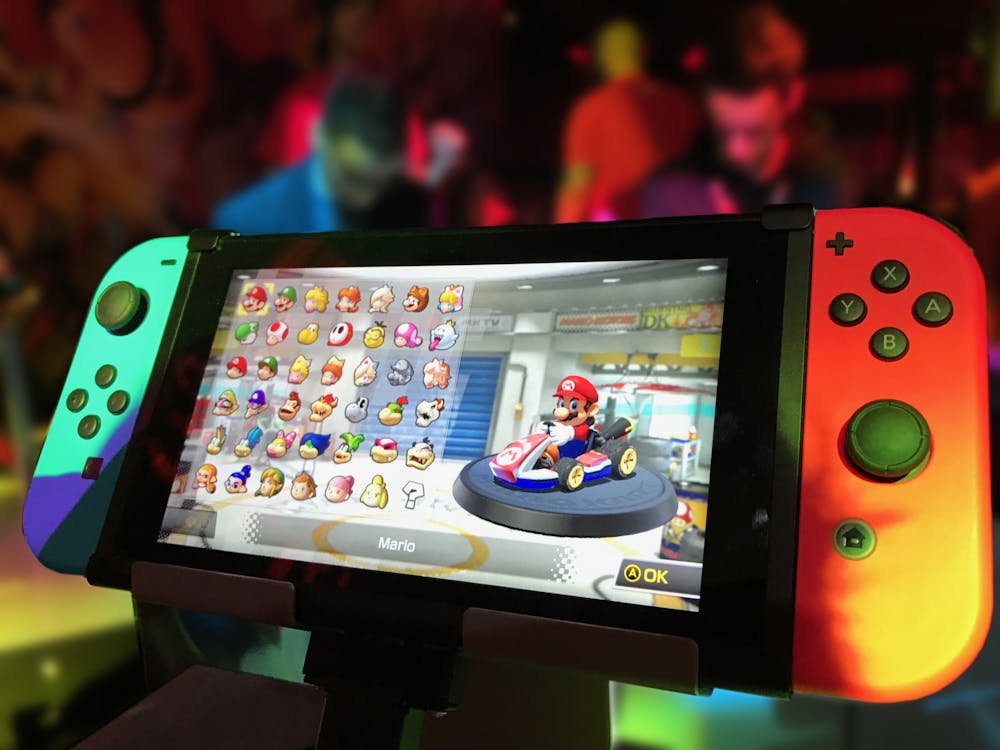
This analysis examines Nintendo's transformation through six strategic frameworks — the same frameworks applied in MBA programmes and strategy consulting engagements. Each theory is explained at professional depth and connected to the specific decisions that drove Nintendo's results.
Section 1 — The Wii U Crisis: A Strategy Failure, Not a Product Failure
What Actually Went Wrong
The Wii U's commercial failure is frequently attributed to consumer confusion about the product. This is an accurate description of the symptom, not the cause. The underlying strategic failures were more fundamental.
Strategic Failure 1 — Competing in a Red Ocean Without Advantage: The Wii U launched into direct competition with PlayStation 4 and Xbox One on hardware power metrics — metrics where Nintendo had structural disadvantages in manufacturing economics, developer relationships, and engineering investment. When you compete on dimensions where competitors have permanent cost and capability advantages, you cannot win.
Strategic Failure 2 — Platform Without Ecosystem: A gaming platform's value is determined by its software library. The Wii U launched without commitments from major third-party publishers (EA, Activision, Ubisoft) and without a pipeline of first-party titles at launch. A platform without software is not a platform.
Strategic Failure 3 — Undefined Customer: The original Wii had a clear target audience — people who had never played video games before, accessed through motion-controlled bowling and tennis. The Wii U's target audience was undefined: not hardcore enough for serious gamers, not accessible enough for casual players, not portable enough for mobile users.
| Metric | Wii (2006–2013) | Wii U (2012–2017) | Ratio |
|---|---|---|---|
| Lifetime Units | 101.6M | 13.56M | 7.5x higher |
| Peak Annual Sales | 25.9M (2009) | 3.45M (2012) | 7.5x higher |
| Operating Profit | Record years | 3 loss years | Reversal |
| Third-party titles | 1,400+ | 700 | 2x fewer |
Section 2 — The Six Strategic Theories Behind the Switch
Theory 1 — Blue Ocean Strategy (Kim and Mauborgne, 2004)
Blue Ocean Strategy holds that sustainable competitive advantage does not come from competing better in existing market spaces (Red Oceans), but from creating uncontested market spaces (Blue Oceans) where competitive dynamics are, at least temporarily, irrelevant.
The Strategy Canvas — the core analytical tool of Blue Ocean — asks companies to identify the dimensions on which competitors compete, their relative performance on each dimension, and the dimensions they could eliminate, reduce, raise, or create to generate new demand.
Nintendo's Switch Strategy Canvas:
| Competitive Dimension | PS4/Xbox | Wii U | Switch |
|---|---|---|---|
| Graphical power | High | Medium | Low |
| Online multiplayer | High | Medium | Medium |
| Third-party game library | Very High | Low | Medium |
| Portability | None | None | Very High |
| Family/social play | Medium | Medium | Very High |
| Hybrid (home + handheld) | None | None | Unique |
| Battery life | N/A | N/A | 4–9 hours |
Nintendo eliminated competition on graphics (accepting inferiority), created competition on portability (the defining differentiator), and reconstructed competition on family play and accessibility. The result: a product with no direct competitors in its primary value dimensions.
The Blue Ocean insight is not that Nintendo made a better console than PlayStation — it made a console that competes in a fundamentally different space. At 141 million units, the Switch is one of the best-selling gaming devices in history precisely because it was not competing for the same customer.

Theory 2 — Hybrid Product Design and Platform Convergence
Product convergence theory describes the process by which two previously separate product categories merge into a single, more valuable offering. The smartphone is the canonical example: the convergence of phone, camera, music player, map, and computer into one device created more value than any of the individual components.
Nintendo had maintained two separate hardware product lines for 30 years:
- Home consoles: NES, SNES, N64, GameCube, Wii, Wii U — large, TV-connected
- Handheld devices: Game Boy, Game Boy Advance, DS, 3DS — portable, separate game libraries
The separation was historical, not rational. From the consumer's perspective, the ideal device would play the same games on the television at home AND portably anywhere. The only reason this had not existed was Nintendo's organisational structure: separate hardware teams for home and handheld had built separate product lines with separate software libraries.
The Switch collapsed these two product lines into one, eliminating the internal organisational duplication AND capturing both market segments simultaneously. One device. Two previously separate audiences. The total addressable market doubled.
The commercial consequence: Nintendo's first-party game development — previously split between home console and handheld — now concentrates entirely on Switch. More resources per title, fewer total platforms, higher per-title quality. Zelda: Breath of the Wild, Animal Crossing: New Horizons, and Super Mario Odyssey were all Switch exclusives benefiting from this concentration.
Theory 3 — IP Monetisation and Franchise Value Compounding
Intellectual Property strategy at scale describes the systematic commercialisation of owned characters, narratives, and brands across multiple media and product categories, generating revenue streams that are loosely correlated with each other and with the core product.
Nintendo's core IP — Mario, Zelda, Pikachu, Metroid, Donkey Kong, Kirby, Splatoon — represents decades of accumulated consumer attachment. Each character has an emotional relationship with a generation of consumers that is extremely difficult to create and essentially impossible to replicate.
The IP Monetisation Acceleration (2016–2024):
| Revenue Stream | Partner | Revenue |
|---|---|---|
| The Super Mario Movie (2023) | Universal/Illumination | $1.36B box office |
| Super Nintendo World (Universal Studios Japan) | Universal | $500M+ annually |
| Pokémon GO (mobile) | Niantic | $7B+ lifetime |
| LEGO Mario, Zelda sets | LEGO Group | Major licensing revenue |
| Nintendo merchandise | Various | Growing annually |
| Nintendo Switch Online | Direct (Nintendo) | $24/year × 36M subscribers |
The strategic insight: IP monetisation creates non-correlated revenue streams. The Super Mario Movie's $1.36 billion box office contributes to Nintendo's revenue regardless of Switch hardware sales cycles. Theme park attendance generates revenue regardless of whether consumers own a Switch. The IP portfolio, properly monetised, becomes a business that is structurally more stable than hardware alone.
The Compounding Dynamic: Each new touchpoint — the movie, the theme park, the LEGO set — introduces Nintendo's characters to new audiences, who then discover the games, who then buy the Switch, who then attend the theme park. The franchise compounds. A consumer who watched the Mario movie at age 8 in 2023 will likely purchase the next Nintendo console in 2028.
Theory 4 — Innovation From Constraint (Resource-Based Creativity)
The conventional view of innovation holds that more resources — more engineers, more budget, more time — produce better products. The constraint-creativity literature challenges this: in many creative domains, resource constraints produce qualitatively superior outputs by forcing designers to focus, prioritise, and innovate rather than augment.
Nintendo's hardware constraint — the Switch uses the Nvidia Tegra X1, a mobile processor that delivered approximately 1/8th the computational power of the PlayStation 4 — forced its game development teams to ask different questions:
Instead of: "How do we make graphics more realistic?" Nintendo asked: "What makes a game genuinely enjoyable for 20 minutes while commuting on a train?"
The answer to the second question is categorically different from the answer to the first. Zelda: Breath of the Wild's open-world design — where players can approach any obstacle from multiple angles, pause and return exactly where they left off, and make meaningful progress in 10-minute sessions — was specifically optimised for the hybrid play experience. It is a design philosophy, not a graphical achievement.
The result: Zelda: Breath of the Wild won 2017 Game of the Year across virtually every major gaming publication — running on hardware that Sony or Microsoft's teams would consider a prototype development kit. Constraint forced design innovation that GPU power could not buy.
Theory 5 — Platform Lifecycle Management
Platform lifecycle theory describes the strategic management of a technology platform through introduction, growth, maturity, and planned successor introduction — maximising the platform's total value generation across its full commercial life.
Nintendo extended the Switch platform lifecycle across multiple hardware iterations:
| Switch Variant | Launch | Price | Target Customer |
|---|---|---|---|
| Nintendo Switch | March 2017 | $299 | Core (TV + handheld) |
| Nintendo Switch Lite | September 2019 | $199 | Portable-only; children |
| Nintendo Switch OLED | October 2021 | $349 | Premium display upgrade |
| Nintendo Switch 2 (announced) | 2025 | TBA | Next-generation successor |
Each variant addressed a different customer segment, extended total platform sales beyond the core audience, and maintained platform relevance across different market cycles. The Lite at $199 made Switch accessible to a mass market; the OLED at $349 captured upgrade demand from early adopters.
The lifecycle management insight: a single hardware launch captures one cohort of consumers. Multiple targeted variants — each addressing a specific unmet need — capture multiple cohorts across a seven-year platform lifespan.

Theory 6 — Nostalgia Marketing and Generational Brand Transfer
Nostalgia marketing theory describes the commercial use of positive emotional memories to generate brand loyalty and purchase intent. Nintendo occupies a uniquely powerful position in nostalgia marketing: for consumers aged 25–45 in 2024, Nintendo games and characters were a foundational childhood experience.
The strategic application of nostalgia is systematic across Nintendo's portfolio:
- Nintendo Switch Online Classic Library: NES, SNES, N64, Sega Genesis games included in subscription
- Classic Mini consoles: NES Classic Mini, SNES Classic Mini — instant sellouts
- Remastered titles: Zelda: Skyward Sword HD, Super Mario 3D All-Stars
- Smash Bros. Ultimate: Features every Nintendo character ever created across 40 years
The generational transfer dynamic is the most commercially powerful aspect: parents who grew up with the original Game Boy, SNES, and N64 now purchase Nintendo Switch for their own children. The emotional credibility Nintendo has with the parent generation translates directly into purchase decisions for the next generation. This is brand value that cannot be manufactured — it must be earned over decades of consistently high-quality products.
Section 3 — The Competitive Landscape: Why Nintendo's Moat is Unique
Three Moats That Compound
Moat 1 — IP Portfolio: Nintendo owns Mario, Zelda, Pokémon (partial), Metroid, Donkey Kong, Kirby, and dozens of other characters with decades of consumer attachment. The cost of building equivalent emotional relationships from scratch is effectively infinite — you cannot buy 40 years of childhood memories.
Moat 2 — First-Party Development Excellence: Nintendo's in-house game development studios — EPD (Entertainment Planning & Development), HAL Laboratory, Retro Studios — have produced the most consistently critically acclaimed first-party games in the industry. Metacritic's all-time highest-reviewed games list is dominated by Nintendo titles.
Moat 3 — Blue Ocean Product Design: Nintendo's track record of creating novel, uncontested market spaces (DS, Wii, Switch) means that even when individual products fail (Virtual Boy, Wii U), the next attempt typically creates a new market rather than competing in an existing one.
| Competitor | Games Available | Key Exclusive IP | Hardware Strength |
|---|---|---|---|
| Nintendo | 6,000+ Switch titles | Mario, Zelda, Pokémon | Hybrid form factor |
| Sony PlayStation 5 | 500+ exclusives | God of War, Spider-Man | Most powerful console |
| Microsoft Xbox | Game Pass library | Halo, Forza | Game Pass subscription |
Nintendo competes in a fundamentally different segment from Sony and Microsoft. PlayStation and Xbox fight for the hardcore gamer who prioritises graphical fidelity and online multiplayer. Nintendo owns the family gaming segment, the casual gaming segment, the nostalgia gaming segment, and the portable gaming segment — without direct competition in any of them.
Section 4 — The Results Dashboard
| Financial Metric | FY2014 (Wii U low) | FY2021 (Switch peak) | Change |
|---|---|---|---|
| Operating Income | −¥46.4B | +¥528.2B | +¥574B |
| Net Revenue | ¥549B | ¥1,758B | +220% |
| Hardware Sales | 2.72M units | 23.06M units | +747% |
| Market Cap | ¥700B (~$6B) | ¥8.1T (~$75B) | +1,057% |
| First-Party Game Revenue | — | Record for every major franchise |
Key Takeaways for Strategy Professionals
1. The most valuable competitive strategies create new market spaces rather than compete in existing ones. Nintendo's most profitable products — Wii, DS, Switch — were each Blue Oceans. Its most damaging failures — Virtual Boy, Wii U — were Red Ocean competitions where Nintendo had no structural advantages.
2. IP value compounds over decades, not quarters. Nintendo's characters were built over 40 years of consistent quality and emotional investment. The commercial value of this IP — powering a $1.36B movie, global theme parks, and a $75B market cap — could not have been created in any shorter time frame.
3. Organisational structure creates and limits innovation. The Switch could only exist because Nintendo reorganised its hardware development teams — collapsing home console and handheld into a single unit. The structure change preceded the product innovation.
4. Platform lifecycle management determines total value generation more than launch performance. The Switch's seven-year lifecycle (2017–2024+) with three hardware variants generated 141M+ in cumulative sales — far more than any single-variant launch could have achieved.
5. Constraint-driven design can outperform resource-rich competitors. Zelda: Breath of the Wild's Game of the Year achievements on modest hardware prove that design philosophy — not computational power — is the ultimate determinant of product quality in creative industries.
Nintendo's case is proof that in creative industries, the companies that understand their customer most deeply, protect their creative identity most fiercely, and create new markets rather than fighting for existing ones will consistently outperform larger, more technically capable competitors.