

Parle-G Case Study — The ₹5 Biscuit That Beat a Pandemic
In April 2020, India was living through one of the strictest national lockdowns in the world. Factories were shut, supply chains were broken, and millions of migrant workers were walking home along empty highways. In the middle of that chaos, one product was moving faster than it had in living memory: a pale-yellow pack of glucose biscuits priced at ₹5. Between March and May 2020, Parle-G reportedly recorded its best sales in roughly eight decades — the strongest stretch since the biscuit launched in pre-independence India.
That was not luck. It was the payoff of decisions Parle Products had been compounding since 1929: never break the price anchor, be available in practically every shop in the country, and accept razor-thin margins in exchange for volumes almost no consumer product on Earth can match.
This case study unpacks how a biscuit cheaper than a bus ticket became the world's largest-selling biscuit brand by volume, and what its pandemic performance teaches about elasticity, distribution, and volume-led economics.
From Vile Parle to the World's Largest-Selling Biscuit
Parle Products began in 1929, when Mohanlal Dayal of the Chauhan family set up a small confectionery unit in Vile Parle, a suburb of Bombay — the neighbourhood that gave the company its name. Toward the end of the 1930s the family added biscuits, launching Parle Gluco as an affordable, Indian-made alternative to imported British biscuits priced beyond the ordinary household's reach. The swadeshi positioning was deliberate: an Indian biscuit, for Indians, at a price a worker could actually pay.
After decades as Gluco — and a wave of copycat "gluco" biscuits from competitors — the brand was renamed Parle-G in the 1980s. The "G" stood for glucose, though later advertising cheekily recast it as "G maane Genius."
The brand reportedly bakes hundreds of millions of biscuits every single day across dozens of owned and contract-manufacturing plants, and its milestones read like a history of Indian FMCG itself:
| Year | Milestone |
|---|---|
| 1929 | Parle Products founded in Vile Parle, Bombay, as a confectionery maker |
| Late 1930s | Parle Gluco launched as an affordable swadeshi alternative to imported biscuits |
| 1980s | Brand renamed Parle-G to escape a crowd of copycat "gluco" biscuits |
| 2011 | Nielsen names Parle-G the world's largest-selling biscuit brand by volume |
| 2013 | Reportedly the first Indian FMCG brand to cross ₹5,000 crore in retail sales |
| Mar–May 2020 | Best sales in roughly eight decades during the COVID-19 lockdown |
| 2021 | Reportedly raises prices meaningfully for the first time in years as input inflation peaks |
The Price-Point Religion
Most companies treat price as a dial to be turned every year. Parle treats the small-pack price as something closer to religion. The entry pack sold at ₹4 for years, and later at ₹5 — and the company reportedly went roughly a quarter of a century without changing the small pack's price, absorbing or engineering around every wave of input-cost inflation in between.
Why be so stubborn about a coin?
Why Price Anchors Matter at the Bottom of the Pyramid
- Single-coin purchases. A large share of Parle-G buyers are daily-wage earners who budget in coins, not cards. ₹5 is one coin, no change, no mental arithmetic.
- The chai ritual. Across India, a glass of tea plus a small pack of Parle-G is a fixed, known expense — comfort measured in single digits. Break the price and you break the ritual.
- Price memory is strongest where incomes are lowest. A ₹1 increase on a ₹5 pack is a 20% hike. Customers at this end of the market notice instantly — and substitute instantly.
- The kirana habit loop. When a shopkeeper knows the pack price never changes, it stays at the front of the counter. Predictability earns shelf position that advertising cannot buy.

Shrinkflation: Fighting Inflation Without Touching the Price
Holding a price for two decades does not mean ignoring inflation — it means managing it with a different lever. Parle's tool of choice is grammage: when wheat, sugar, palm oil, or fuel costs rise, the pack price stays fixed and the pack gets slightly lighter. When costs ease, grammage can quietly be added back.
The numbers are striking. Over roughly fifteen years, the weight of the small ₹5-range pack reportedly drifted down from about 100 grams to roughly 55 grams — a near-halving of quantity that preserved the sacred price point through multiple commodity cycles.
| Lever | What the Consumer Sees | Elasticity Risk | How Parle Uses It |
|---|---|---|---|
| Price increase | ₹5 becomes ₹6 — a 20% jump on a coin-denominated purchase | Very high — immediate substitution at the bottom of the pyramid | Last resort, used rarely |
| Grammage reduction | Same coin, slightly lighter pack | Low — per-pack affordability is preserved | Primary inflation-management tool |
| Grammage addition | Same coin, slightly heavier pack | None — perceived as generosity | Used when input costs soften |
The discipline finally met its limit in late 2021, when wheat, palm oil, and energy inflation ran so hot that Parle reportedly raised prices across its portfolio by roughly 5–10% — treated internally, by all accounts, as an exceptional event rather than a new habit.
The strategic insight is that a price is not just a number — it is an anchor that holds an entire mass-market habit in place. Parle chose to re-engineer its product a dozen times rather than disturb the anchor once.
Distribution Is the Moat
Parle-G's second pillar is availability so deep it functions as advertising. Parle products reportedly reach more than six million retail outlets across India — from metro supermarkets to single-shelf kirana stores in villages with no paved road.
Three choices make this work:
- Kirana-first, not modern-trade-first. The neighbourhood shop, not the hypermarket, is the primary battlefield. Small packs, low prices, and fast rotation are designed for the kirana counter.
- A deep wholesaler and depot pyramid. Layers of distributors and sub-wholesalers carry stock into places no direct sales force could economically reach.
- Factories close to demand. Dozens of plants spread across the country cut freight cost per pack — decisive when the product sells for ₹5 and margins are counted in paise.
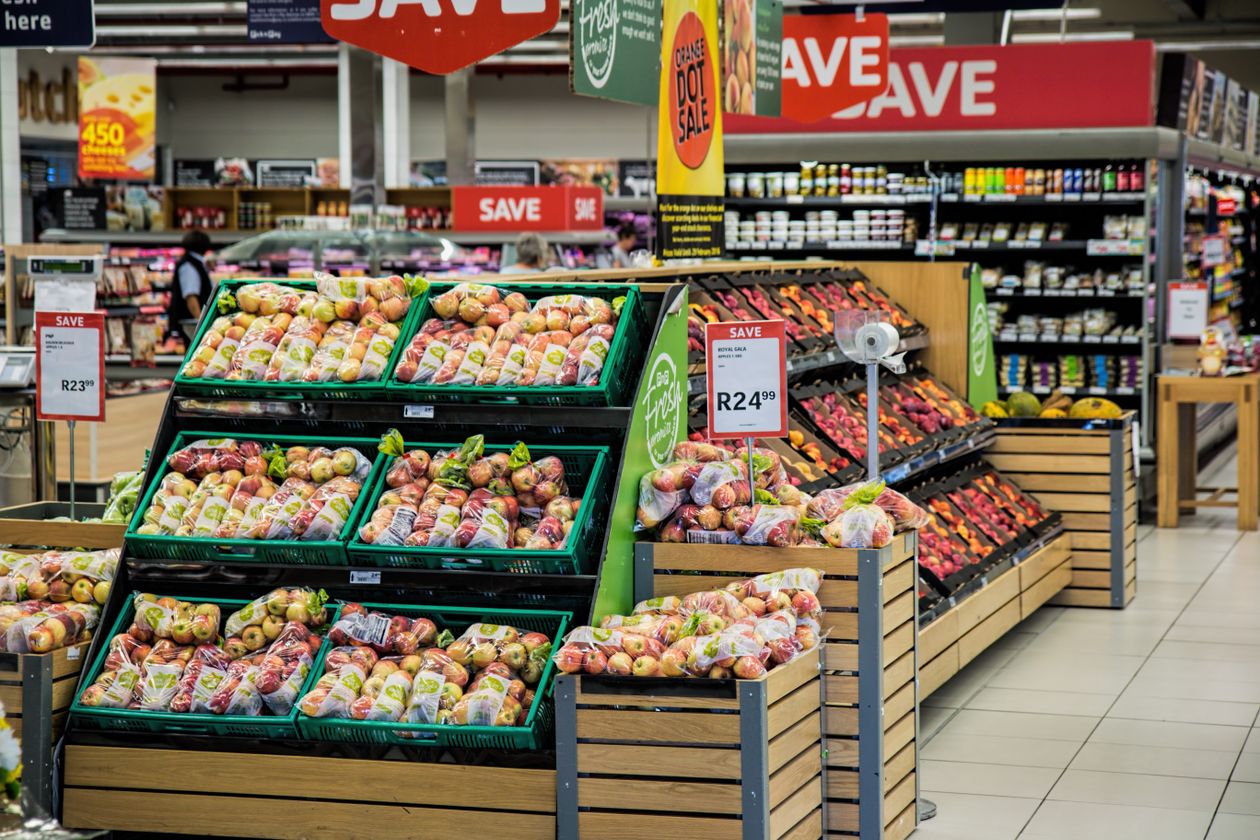
For a product with near-zero advertising and near-zero margin per unit, being physically present everywhere is the entire strategy. A customer who cannot find Parle-G buys the biscuit next to where Parle-G should have been. Distribution depth is what makes the price anchor defensible.
The Volume Machine: Razor-Thin Margins × Enormous Scale
Parle-G's profit-and-loss statement is a different species from that of a premium FMCG brand. Margins on the flagship are reportedly thin — the glucose biscuit category as a whole runs on single-digit operating margins — and the entire model depends on multiplying paise of profit by billions of packs.
This volume-led logic shapes everything:
- Procurement scale. Buying wheat flour and sugar at Parle-G's volumes gives cost advantages smaller rivals cannot match.
- Utilisation obsession. Plants run flat out; contract manufacturers absorb demand spikes without capital cost.
- SKU discipline. The flagship is brutally standardised — one recipe, one look, minimal variants — because complexity is margin's enemy at this price point.
The lesson for analysts: revenue quality differs. Two companies with identical revenue can have completely different machines underneath — fat margins on thin volumes, or thin margins on enormous volumes. They respond differently to inflation, to competition, and to crisis. Parle-G is the purest Indian example of the second machine.
The COVID-19 Stress Test
March to May 2020 was the harshest operating environment Indian FMCG had ever faced — and it was Parle-G's finest quarter in roughly eighty years.
Several forces converged:
- Comfort food economics. In a panic, households stock what is cheap, filling, familiar, and long-lasting. Parle-G is all four.
- Relief-meal staple. Parle-G became a fixture of migrant relief kitchens and NGO and government dry-ration kits — no cooking needed, survives transport, a meal of last resort. Parle also announced donating roughly three crore packs to relief efforts.
- Operational restart speed. Parle reportedly restarted Parle-G lines early in the lockdown and cut production to core SKUs, keeping shelves filled while competitors struggled to restart.
- The distribution moat, cashed in. Six million outlets meant that wherever a customer was locked down, Parle-G was already there.

The results, as reported at the time: the company gained close to five percentage points of overall biscuit market share during the lockdown months — with Parle-G contributing the overwhelming bulk of it — and management described it as the brand's best sales performance in roughly eight decades. A ₹5 product built for the poorest customer turned out to be the single most crisis-proof asset in Indian FMCG.
Competition and the Premiumisation Squeeze
Parle-G's dominance is in volume, not value — and that distinction defines its competitive battle.
| Dimension | Parle-G | Britannia Good Day |
|---|---|---|
| Segment | Glucose / mass value | Premium cookies |
| Core price point | ₹5 small pack | Higher per-gram realisation |
| Margin model | Razor-thin margin × massive volume | Healthier margin × smaller volume |
| Battlefield | Kirana counters, rural depth | Urban modern trade, gifting, snacking occasions |
| Brand engine | Nostalgia, ubiquity, price trust | Advertising, innovation, variants |
Britannia — with Good Day, Tiger, Marie Gold, and NutriChoice — leads the premium end of Indian biscuits, where per-kilo realisations and margins are far richer. ITC's Sunfeast attacks from the same direction. As Indian incomes rise, the biscuit market is steadily premiumising, and the glucose segment's share of the category has been stagnant to declining for years.
Parle's response has been a two-track portfolio: protect the fortress at ₹5 while pushing its premium Platina range — Hide & Seek, Milano, and their variants — into the higher-margin fight. The strategic risk is real: a brand worshipped for being cheap can struggle to follow its customers upmarket. But the bottom-of-pyramid base is so enormous that abandoning it is unthinkable.
Brand Austerity: The Girl Who Never Aged
Parle-G may be the least-marketed mega-brand in the world. The wrapper — yellow-and-white, red Parle logo, and the illustration of a chubby-cheeked little girl — has remained essentially unchanged for decades. Viral posts periodically claim the girl is a real woman; the company has clarified that she is an illustration dating to the 1960s.
The austerity is strategic:
- Advertising spend on the flagship is minimal relative to its size; ubiquity and nostalgia do the work that media budgets do for other brands.
- Never redesigning the pack protects instant recognition for buyers across literacy levels — the wrapper itself is the brand.
- Every rupee not spent on marketing is a rupee available to defend the ₹5 price point.
Where rivals refresh packaging every few seasons, Parle-G's refusal to change became its identity — consistency, compounded over six decades, produced brand equity that advertising money could not buy.
Key Takeaways
1. Price elasticity is brutal at the bottom of the pyramid — so protect the anchor, not the margin. A 20% price hike on a ₹5 product is a demand cliff, not a pricing decision. Parle chose grammage engineering over price increases for decades because the anchor, once broken, cannot be cheaply rebuilt.
2. Volume-led P&Ls are a different machine — learn to read them. For Meritshot's investment banking students: two FMCG firms with similar revenue can deserve very different valuations depending on whether the model is margin-led or volume-led. Volume machines are more inflation-fragile per unit but far more recession-proof in demand.
3. Distribution depth is a moat that compounds silently. Six million outlets took decades to build and cannot be replicated by capital alone. In the COVID stress test, distribution — not advertising, not innovation — was the asset that converted crisis into the best quarter in eighty years.
4. Shrinkflation is an analytics problem. For business analytics students: grammage optimisation is applied elasticity modelling — estimating exactly how much quantity can flex before perceived value breaks, cycle after cycle, commodity by commodity. It is one of the highest-leverage data problems in FMCG.
5. Resilience is designed, not declared. For cyber security students, Parle's pandemic playbook is a textbook continuity design: geographic redundancy (plants spread nationwide), graceful degradation under stress (cutting to core SKUs), and protection of the critical path (the flagship line restarts first). The same principles govern incident response and business continuity planning.
6. Consistency can outperform spend. An unchanged wrapper, an unchanged price, and an unchanged promise built more brand equity than decades of advertising could have — because at the bottom of the pyramid, trust is the scarcest commodity of all.
Parle-G's story is not really about biscuits. It is about what happens when a company picks one customer — the one with the least money — and spends ninety years refusing to make that customer's decision any harder than handing over a single coin.


