How Is Investment Banking Connected to the Stock Market?
Ever wonder how a private company turns into a public one? How do its shares end up in your trading app?
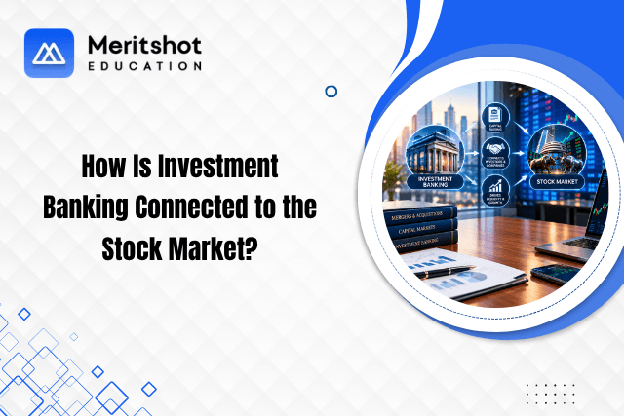
The answer is investment banking. It links companies to the stock market through IPOs, underwriting, and capital raising. Banks help firms get ready for public listings. They value the business. They structure the share offer. They bring in investors.
But here's the thing: investment banks don't run the stock market. Their job usually starts when a company needs cash or wants to close a big deal.
Let's break this down, starting with how the primary and secondary markets fit together.
What Does Investment Banking Actually Mean?
Investment banking is a niche area of finance. It helps companies, governments, and big institutions raise money and pull off major deals.
Banks typically advise on:
- Initial Public Offerings (IPOs)
- Mergers and acquisitions (M&A)
- Equity issuance
- Corporate bonds
- Private placements
- Corporate restructuring
The core idea is simple. Investment banking opens the door to capital markets.
Say a private company needs funds to grow. It might team up with an investment bank to sell shares to the public.
That's the moment investment banking meets the stock market.
How Is Investment Banking Connected to the Stock Market?
The clearest link runs through the primary market. When a company sells new shares to raise cash, those shares land in the primary market. An investment bank guides that whole process.
Here's what it usually looks like:
| Stage | What Happens | The Bank's Role |
|---|---|---|
| 1 | Company decides to raise capital | Advises on the best way to fund it |
| 2 | Company preps for an IPO | Reviews the financials and the business |
| 3 | Valuation gets done | Helps price the offering |
| 4 | Offering documents come together | Handles the transaction and paperwork |
| 5 | Investors get approached | Markets the offering |
| 6 | Shares get issued | Manages underwriting and allocation |
| 7 | Trading begins | The stock exchange takes over |
Once shares are listed, investors trade them in the secondary market.
So the relationship isn't complicated. Investment banking creates and hands out new securities. The stock market gives those securities a place to trade later.
How Does Investment Banking Help a Company Go Public?
An IPO is the clearest example of this link. Say a fast-growing company wants to raise ₹1,000 crore by selling shares. It hires one or more investment banks to run the process.
The bank's team typically:
- Reviews the company's financial health
- Studies similar public companies
- Estimates a fair valuation
- Structures the offering
- Prepares transaction documents
- Markets the shares to investors
- Coordinates with other parties in the deal
- Supports allocation and listing
Exact duties shift depending on the deal and the banks involved.
But the bigger point stands. An investment bank acts as the go-between, linking the company to the capital markets.
What Is the Role of IPO Underwriting?
Underwriting is another big piece of this puzzle. In a firm-commitment deal, the bank (or a group of banks) buys the shares from the company first. Then it sells them to investors. This takes a lot of the guesswork out of raising money for the company.
Underwriters dig into:
- Company financials
- Industry trends
- Comparable firms
- Investor appetite
- Market conditions
- Expected valuation
All of this shapes how the offering gets built.
One thing to note: a bank doesn't just pick a "fair" price out of thin air. IPO pricing blends valuation work, investor demand, market mood, and ongoing talks with the company.
How Do Investment Banks Price IPO Shares?
Pricing an IPO takes more than glancing at current profits. Banks usually lean on a few valuation methods:
- Comparable company analysis
- Discounted cash flow (DCF)
- Precedent transaction analysis
- Industry-based valuation
They also watch investor demand closely.
If there is a lot of interest at the IPO roadshow, this can influence the final price and number of shares.
Why is it important? To provide the firm with all necessary funding and make sure that it is an interesting offer for investors. It's the reason why investment banking plays such an important role prior to the stock issuance.
Difference between Primary and Secondary Markets
This split makes the connection easier to see.
Primary market: where new securities get issued. A company sells fresh shares through an IPO and pockets the capital.
Secondary market: where existing shares trade between investors. After the IPO, Investor A can sell shares to Investor B. The company doesn't get a rupee from that trade.
| Primary Market | Secondary Market |
|---|---|
| New securities are issued | Existing securities change hands |
| Company raises capital | Investors trade with each other |
| IPOs are the classic example | Everyday stock trading is the norm |
| Investment banks play a lead role | Exchanges, brokers, and investors run the show |
Get this difference, and the whole investment banking–stock market link gets much clearer.
How Is Investment Banking Different From Stock Trading?
They're both part of finance, but they're not the same job.
- IB centers on deals: IPOs, equity offerings, debt issuance, M&A, and corporate advice.
- Sales and trading is different. It's about buying, selling, and making markets in securities day to day.
Some big banks run both arms under one roof. That doesn't mean every desk at a bank is doing "investment banking" work. Market making, brokerage, research, and investment banking each serve a different purpose.
How Do Investment Banks Support Capital Raising?
IPOs aren't the only way companies raise cash. Investment banking also opens up debt markets. Common routes include:
- Corporate bonds
- Follow-on equity offerings
- Private placements
- Syndicated financing
- Convertible securities
A company might issue bonds instead of new shares. The bank still handles the structuring, checks market conditions, and lines up investors.
This ties investment banking to the wider capital market, not just to stock exchanges.
How Does M&A Affect the Stock Market?
Mergers and acquisitions can shake up stock prices fast. Banks usually guide companies through these deals by:
- Valuing both businesses
- Reviewing offers
- Building financial models
- Structuring the transaction
- Negotiating terms
- Running due diligence
- Advising boards and shareholders
Say Company A announces it's buying Company B. Investors react almost instantly. Company B's stock often moves toward the offer price. Company A's stock might dip or rise, depending on how the market feels about the cost and the payoff.
That's why a single M&A announcement can ripple through an entire sector.
Can Investment Banking Influence Stock Market Activity?
Yes, but keep it in perspective. Banks sit at the center of major capital-market deals. Those deals can shift the supply of shares, change valuations, and move investor sentiment.
A huge IPO can pull in a wave of investor attention. A big follow-on offer can flood the market with new shares. An acquisition can reset expectations for a whole industry. Still, banks don't set stock prices. Prices move because of:
- Company earnings
- Economic conditions
- Interest rates
- Investor demand
- Market mood
- Industry shifts
- Government policy
- Global events
So investment banking is a key gear in the machine. It's just not the whole machine.
Why Does Investment Banking Matter to the Stock Market?
It helps companies step from private funding into public markets. That shows up in a few clear ways:
- It raises capital: Companies use equity and debt markets to fund growth, deals, and new projects.
- It connects companies with investors: Banks market the securities and line up institutional buyers.
- It powers major corporate moves: M&A and restructuring can reshape a company's value overnight.
- It structures the deals: Big transactions need careful valuation, paperwork, and risk checks.
Put together, these pieces build a strong bond between investment banking and the stock market.
What Skills Do You Need to Work in Investment Banking?
Curious about this path? A few technical skills go a long way:
- Financial modelling
- Company valuation
- DCF analysis
- LBO analysis
- Excel
- Financial statement analysis
- Capital markets knowledge
- M&A basics
You'll also need sharp analytical thinking and clear communication. Much of the job is turning dense numbers into a simple recommendation.
Structured training can help here. Practical projects and real financial models build these skills faster than theory alone.
How Does Technology Shape Modern Investment Banking?
Tech has reshaped how banks operate day to day. Teams now lean on technology for:
- Financial modelling
- Data analysis
- Due diligence
- Risk assessment
- Market research
- Client communication
AI and automation now handle a lot of the heavy lifting on data. But they don't replace judgment. Investment banking still needs people who understand companies, markets, risk, and deal structures.
Conclusion
Investment banking and the stock market stay tightly linked, mostly through capital raising and IPOs.
Banks help companies prep for public offerings, work out fair valuations, structure the deal, and bring in investors. Once shares list, investors take over and trade them in the secondary market.
The difference boils down to this: investment banking gets companies into the capital markets. The stock market gives those shares somewhere to trade.
Understand this link, and IPOs, M&A news, stock swings, and capital raises all start making a lot more sense.
Click here to explore our premier investment banking course and accelerate your high-paying finance career today.
Follow us on Instagram and Facebook to stay updated with more investment banking career advice, industry insights, and professional finance tips.
FAQs
1. What is the main link between investment banking and the stock market?
Investment banking brings companies to the stock market through IPOs. It also handles trading support, M&A, and capital raising.
2. Do banking firms trade stocks directly?
Some bank divisions run trading desks, yes. They execute large stock market trades for institutional clients.
3. Is investment banking a good career choice today?
Yes. It's still a high-demand field, and growing stock markets keep creating more investment banking roles.
4. How long does it take to learn these skills?
Most structured programs run several months. They cover financial modelling, valuation, and market fundamentals in depth.
5. How does Meritshot help your career?
Call Meritshot at +91 70425 73911 . Expert training programs help you master corporate bonds and land top finance jobs with Meritshot support.